One of the biggest gaps in concussion management is this:
Athletes are often cleared based on how they feel and report symptoms, versus how they move.
Within our sports physical therapy program at The Performance Shift in Centennial, Colorado, we use tools like VALD Performance ForceDecks to bridge that gap—giving us objective, measurable data on balance, neuromuscular control, and force production to guide return-to-sport decisions.
Why Objective Data Matters in Concussion
Research shows that athletes can demonstrate persistent balance and neuromuscular deficits even after symptoms resolve (Howell et al., 2022).
That means:
- “I feel fine” ≠ fully recovered
- Symptom-based clearance alone can miss real risk
- Athletes can be at increased risk for lower extremity injuries like an ACL tear, ankle sprain, etc.
Force plates allow us to measure:
- Center of pressure (balance control)
- Force production
- Asymmetries in balance, single-leg squat and jump mechanics
- Rate of force development and reaction time
VALD Data Example 1: Balance Deficits (Acute → Chronic)
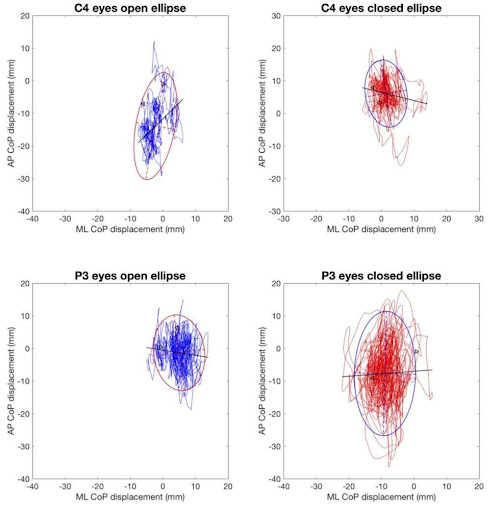
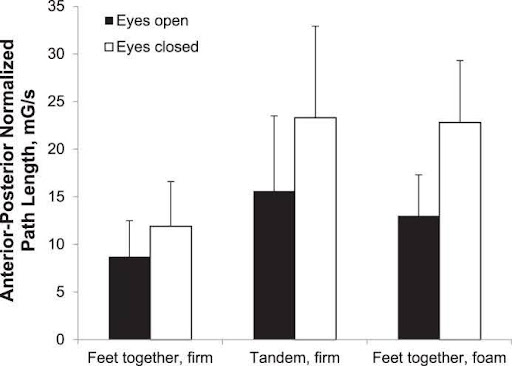
What we measure (standing balance DL/SL, squat DL/SL):
- Center of Pressure (CoP) velocity
- Medial-lateral sway
- Anterior-posterior sway
- Ellipse area (overall stability)
Example Athlete Data:
| Metric | Acute (Week 1) | Week 4 | Goal (Return to Sport) |
|---|---|---|---|
| CoP Velocity (mm/s) | 28 | 18 | < 15 |
| ML Sway (mm) | 12 | 8 | < 6 |
| AP Sway (mm) | 15 | 9 | < 7 |
| Ellipse Area | High | Moderate | Low |
Clinical Insight:
Even at 4 weeks, this athlete reported no symptoms—but the data still shows:
- Increased sway
- Reduced postural control
- Reduced reaction time
This aligns with research showing objective balance deficits persist beyond symptom resolution.
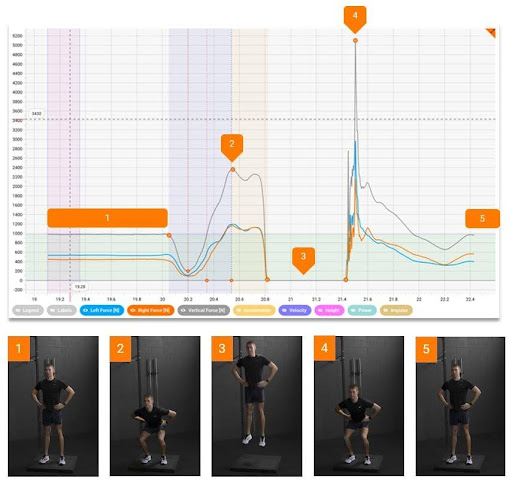
VALD Data Example 2: Countermovement Jump (Neuromotor Control)
What we measure:
- Jump height
- Peak force (L vs R)
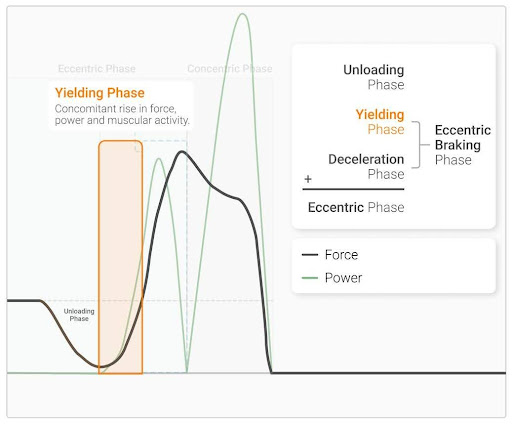
- Eccentric deceleration control
- Concentric impulse
- Flight time : contraction time ratio
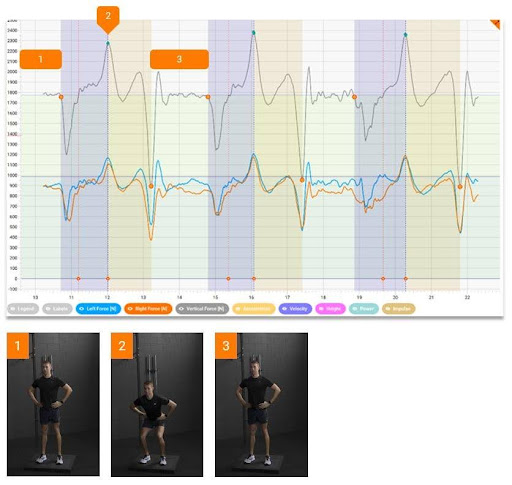
Example Athlete Data:
| Metric | Post-Concussion | Baseline | Goal |
|---|---|---|---|
| Jump Height | 18 cm | 24 cm | ≥ 95% baseline |
| Peak Force Asymmetry | 14% | 4% | < 10% |
| Eccentric Rate of Force | ↓ | Normal | Restored |
| Concentric Power | ↓ | Normal | Restored |
What this means:
After a concussion, athletes often show:
- Slower force production
- Poor deceleration control
- Increased asymmetry
Force plates reveal deficits that aren’t visible to the eye but directly impact:
- Cutting
- Landing
- Reaction time
VALD Data Example 3: Landing Mechanics (Injury Risk Post-Concussion)
What we measure (Drop jump, SL jump):
- Peak landing force (L vs R)
- Time to stabilization
- Force absorption strategy
- Landing asymmetry %
Example Athlete Data:
| Metric | Post-Concussion | Goal |
|---|---|---|
| Landing Asymmetry | 18% | < 10% |
| Time to Stabilize | 2.5 sec | < 1.5 sec |
| Peak Force | Uneven | Symmetrical |
Why this matters:
Athletes post-concussion often:
- Offload one side
- Struggle to stabilize quickly
- Show delayed neuromuscular response
This is one of the key reasons research shows increased musculoskeletal injury risk after concussion.
How We Use This Data at TPS
ForceDecks is one piece of our broader approach to concussion physical therapy and return to sport. Specifically, the data allows us to:
1. Establish Baseline + Post-Injury Gap
- Compare athlete to their pre-injury data or normative ranges
- Identify hidden deficits
2. Track Weekly Progression
- Objective improvements in balance, power and strength asymmetries removes the guess work
3. Set Clear Return-to-Sport Criteria
Instead of time and symptom based clearance, we use:
- ≥ 90–95% symmetry
- Normalized balance metrics
- Restored force production curves
4. Communicate with Confidence
Athletes, parents, and coaches don’t just hear:
“You’re good to go”
They see:
“Here’s the data showing you’re ready.”
The Bigger Picture: From Symptom-Based to Performance-Based Clearance
Traditional concussion care asks:
- Are symptoms gone?
At TPS, we ask:
- Can you produce force efficiently?
- Can you control your body under load?
- Can you react and stabilize like your pre-injury self to prepare for sport?
Final Thought
Objective data doesn’t replace clinical decision-making.
Using tools like VALD ForceDecks, we can:
- Detect deficits earlier
- Progress athletes more precisely
- Reduce reinjury risk
- Build confidence in return-to-play decisions
And most importantly—help athletes return better, stronger, and more resilient than before their injury.
Citations
Howell DR, Seehusen CN, Carry PM, Walker GA, Reinking SE, Wilson JC. An 8-Week Neuromuscular Training Program After Concussion Reduces 1-Year Subsequent Injury Risk: A Randomized Clinical Trial. Am J Sports Med. 2022;50(4):1120-1129. doi:10.1177/03635465211069372
Modernizing Balance Assessments with ForceDecks | VALD Health. October 9, 2024. Accessed May 6, 2026. https://valdhealth.com/news/modernizing-balance-assessments-with-forcedecks