I’ve spent the last six years working with hockey players all over Centennial and the Denver metro, from kids just learning their edges to pros trying to squeeze out one more step of explosiveness, and if there are three things every player asks me, it’s this: How do I skate faster? How do I shoot harder? And what should I be doing in the off-season?
Let’s break it down with on and off-ice hockey training that actually moves the needle.
Skating Faster: It’s Not Just “More Effort”
Most players think speed comes from putting in more effort or taking more strides. It doesn’t. Speed comes from force production and efficiency. If you can’t apply force into the ice, you’ll be stuck spinning your wheels.
What actually matters:
1. Lower body strength (especially single-leg)
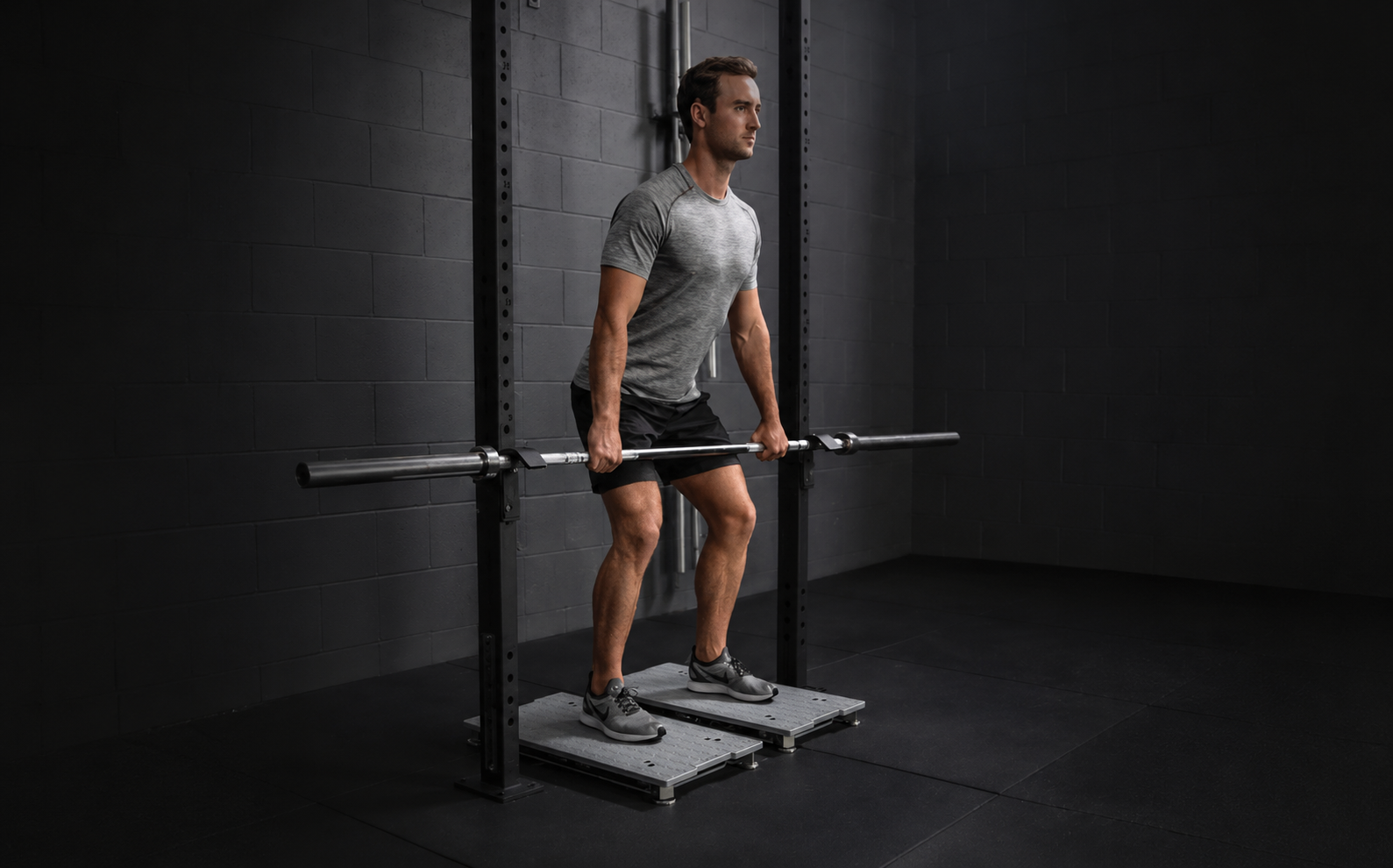
Hockey is played one leg at a time. In the gym, if you’re squatting a lot and feeling stable but you have trouble staying balanced while doing lunges, that’s something that needs to be addressed.
To improve your balance, unilateral movements are going to be key. Unilateral movements (exercises that work one limb at a time) are essential for any sport. They mimic the dynamic, multi-directional actions that are a part of sports, they correct muscle imbalances, and they enhance your balance and stability.
Examples of unilateral movements:
- Split squats
- Lateral lunges
- Single-leg or staggered stance RDLs
2. Lateral power
Hockey is a sport that lives side-to-side, where speed is generated by a lateral push off the ice. That’s why lateral power development is going to be very beneficial. A stronger lateral leg drive allows players to generate more force with each stride, translating directly into faster starts and more speed.
In the gym, start with body weight movements (skater jumps, lateral bounds), and as you progress you can add outside forces like medicine balls, resistance bands, and cables.
3. First three steps: acceleration
Speed gets you to the puck, but acceleration gets you the goal. Hockey is a sport where you’re constantly stopping and starting and living in rapid changes of direction. Players will rarely reach top-end speed and maintain it for a majority of the game. That’s why you need to be quick within those first few steps to beat others to the puck and create distance for goal-scoring opportunities.
Acceleration can be trained with:
- Short sprints (10 to 20 yards)
- Resisted start sprints (sleds, bands)
- Falling starts and reaction drills
Shooting Harder: It’s a Full-Body Skill
A harder shot isn’t just about how strong your arms are. It’s about how well you transfer energy from the ground up.
The real drivers of shot power:
1. Rotational power
Your shot is a rotational movement. You should be training that same movement pattern in the gym, especially with load. This can be done in a variety of ways, including medicine ball rotational throws, cable lifts and chops, or landmine rotations.
2. Core stiffness (not just “abs”)
Your core is the bridge between your upper body and your lower body. It allows you to transfer power for your shots, maintain your balance while skating, and stay strong along the boards. You should be including exercises that not only improve rotational power but also exercises that help you stay strong against it (anti-rotation and stability).
3. Upper body speed
Just like how you need your legs to be both strong and powerful to generate speed on the ice, you need to train your upper body the same way. Don’t just focus on lifting heavy. Also include exercises that translate that strength into power and speed.
Upper body power and speed exercises:
- Explosive push-ups
- Medicine ball tosses or wall slams
Off-Season: This Is Where You Separate Yourself
The off-season is where careers are made, or quietly stall out. This is the time where structured Sports Performance training and recovery should become an athlete’s main focus. It’s difficult to build strength, power, and speed during the season because the games, travel schedules, and practices are so demanding.
What Most Players Get Wrong
They go through the motions, with no intent behind their actions.
- Doing random workouts instead of a structured plan
- Avoiding single-leg work because it’s hard
- Shooting 20 lazy pucks instead of 200 intentional ones
- Treating conditioning like punishment instead of performance
None of this works long term.
What Actually Works
Consistency beats everything. You don’t need a perfect program. You need:
- Structured strength work
- Explosive training layered in
- Intentional skill reps
- Enough recovery to actually adapt
Stick to a plan for the entire off-season, and you won’t just feel better. You’ll be noticeably faster, more powerful, and harder to play against.
If you’re a hockey athlete in Denver ready to level up with personalized Sports Performance training, reach out. Whether you train with us in-person at The Performance Shift in Centennial or online, we’ll build you a program that fits your position, your goals, and your off-season.