Jumping more won’t make you jump higher. Most people figure that out the hard way: months of box jumps and depth drops, no change in the vertical, then they blame genetics. The real problem is order. To increase your vertical jump, you have to train it like a skill, with strength, power, plyometrics, and stiffness stacked the right way. The athletes adding real inches aren’t doing more jumps. They’re layering the right work on top of each other.
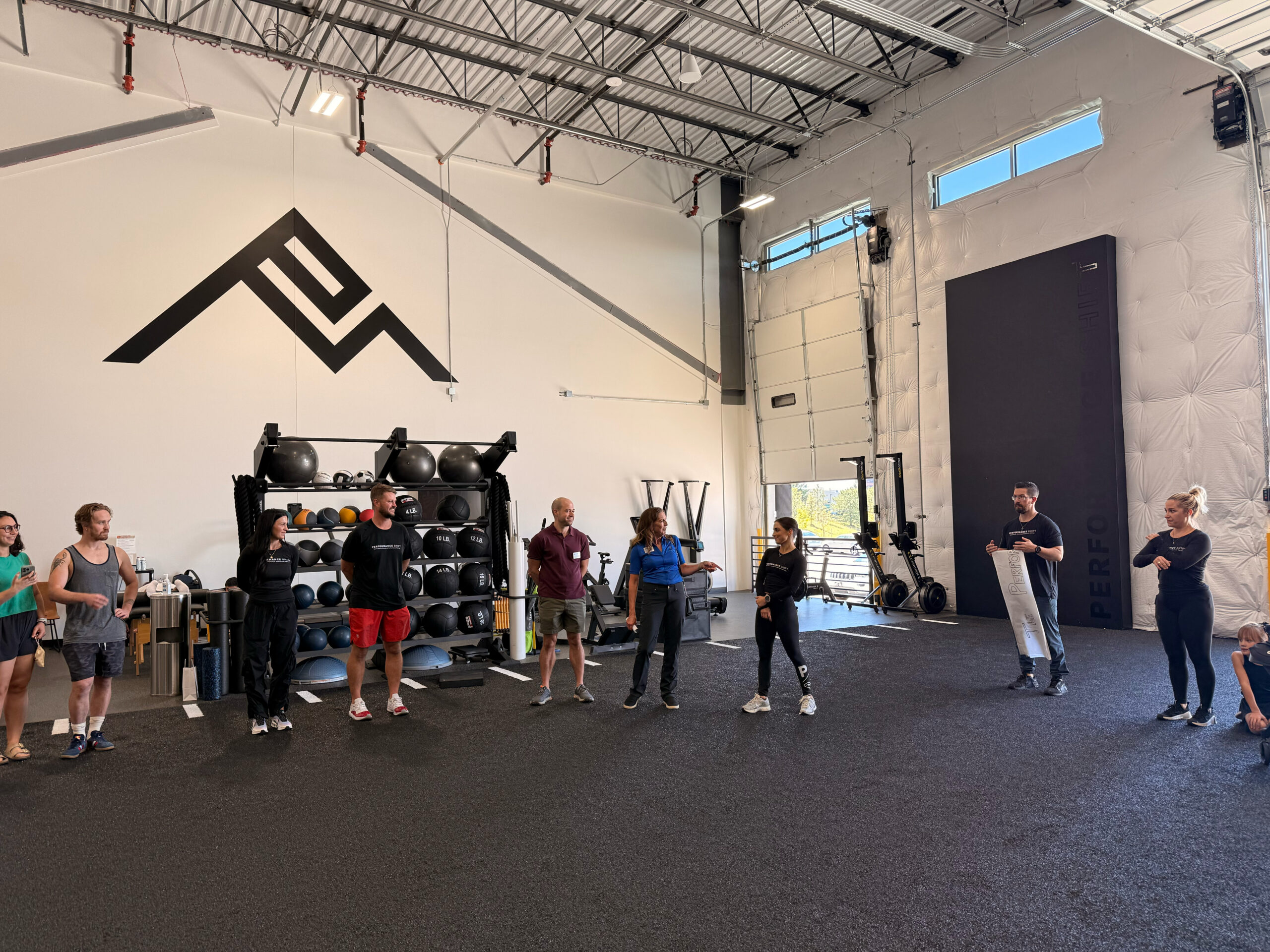
Here’s the 5-layer framework we use with athletes across Centennial and the Denver metro in our Sports Performance training program at The Performance Shift: strength, power, plyometrics, progressive jumps, and weighted overload, in that order.
Layer 1: Strength Training for Vertical Jump. Get Strong First.
You cannot express power you don’t have. Before you worry about being explosive, you need to be strong. Strength is the ceiling for everything else when it comes to your vertical jump.
This means getting into the gym and doing the boring, heavy work: squats, trap bar deadlifts, Romanian deadlifts, split squats. Movements that load the hips, hamstrings, and quads through a full range.
Strength training for this purpose isn’t about getting big. It’s about building the capacity to produce force. That’s it.
Keep your sets in the 5 to 8 rep range at moderate to heavy loads. Heavy enough that the last rep is a genuine effort, light enough that your form holds together and the bar moves with intent. This is the zone where you build maximal strength that actually transfers.
Two to three days per week is plenty. Progress the load over weeks and months. Slow, consistent strength gains compound into serious jumping ability.
Layer 2: Train Power Separately.
Strength and power are related but they’re not the same. Power is how fast you can apply that strength, and if you don’t train it specifically, you won’t have it. This is the part most people skip when they’re trying to improve their vertical jump.
Power training looks different from strength training. The loads come down, the speed goes up. You’re talking 3 to 6 reps with light to moderate loads: jump squats, hang cleans, loaded broad jumps, banded squats. The one rule: every rep is fast. If you’re grinding through it, the load is too heavy.
The bar should move fast. If it’s slow, you’re not training power, you’re doing more strength work with less weight.
Treat every set like it matters. Stop the set the second speed drops. Rest fully between sets. Power training done sloppy is just cardio.
Layer 3: Plyometrics for Vertical Jump. Build Lower Leg Stiffness with Pogos.
Here’s what most vertical jump programs miss: the ankle and lower leg act like a spring. If that spring is soft, you’re leaking energy on every takeoff. Pogos fix that. This is where a real plyometrics workout for vertical jump pays off.
There are two types and you need both.
Extensive pogos are your conditioning tool. Higher volume, lower intensity. These build the tissue capacity to absorb and return force repeatedly. Think 3 to 5 sets of 20 to 30 contacts. Stay stiff at the ankle, minimal ground contact time. This builds the base.
Intensive pogos are lower volume, maximum effort. Fewer contacts, more intent. Think 5 to 8 sets of 6 to 10 contacts with near-maximal effort and full rest between sets. This is where you train the quality.
Soft ankles equal soft jumps. Period. The lower leg is the last thing that touches the ground before you leave it, so train it accordingly.
Start with two-legged pogos, then progress to single leg. Height and load come later. First, learn to be stiff and fast off the ground.
Layer 4: Progress Jumps Slowly and Deliberately.
Depth drops and box jumps are the exercises to jump higher where strength, power, and stiffness all come together. But only if you can land correctly.
Start low. A 12-inch box is not embarrassing. Landing mechanics matter way more than how high the box is. You’re looking for a stiff, quiet, controlled landing: knees tracking, hips loaded, no collapsing inward, no folding at the waist.
If your landing looks like a controlled crash, the box is too high or your hips aren’t strong enough. Back off. Fix it. Come back.
Raise the height 2 to 3 inches at a time. Mechanics are the gatekeeper. If they break down, you haven’t earned the next step yet.
Layer 5 (Advanced): Weighted Jumps. But Only When You’re Ready.
Once you’ve put in real time with the basics and your bodyweight jumps are crisp, fast, and powerful, you can introduce a small external load. A weighted vest or dumbbells at roughly 10% of your bodyweight.
This works because the jump still has to be powerful and fast, not heavy and slow. If adding weight makes you jump slower, you’ve defeated the purpose. The overload only works when the movement pattern stays intact.
Slow, heavy jumps aren’t power training. They’re just squats with a worse range of motion.
Vertical Jump Training FAQ
Will jumping more often increase your vertical?
No. Jumping more without the strength, power, and stiffness underneath it just grinds your joints and stalls your progress. The athletes adding real inches train the inputs first: strength, then power, then plyometrics, then progressive jumps. The actual jump is the test, not the training.
How long does it take to increase your vertical jump?
Plan in months, not weeks. Real gains in your vertical jump come from strength and power that compound over a full training cycle. Most athletes start to feel a difference inside the first couple of months, with bigger changes building over the year as the strength base deepens. Progress the loads gradually and stay consistent.
What are the best exercises to jump higher?
Each layer of the framework calls on specific movements: squats, trap bar deadlifts, Romanian deadlifts, and split squats for strength. Jump squats, hang cleans, loaded broad jumps, and banded squats for power. Pogos for lower leg stiffness. Depth drops and box jumps to bring it all together.
Do squats help your vertical jump?
Yes. Squats and other heavy lower-body lifts (trap bar deadlifts, Romanian deadlifts, split squats) build the force production every jump draws from. Stick to 5 to 8 reps at moderate to heavy loads, two to three days a week. Strength is the ceiling for everything else.
What are the best plyometric exercises for jumping higher?
Start with pogos to build lower leg stiffness. Two-legged first, then single leg as you progress. Once that base is solid, add depth drops and box jumps to integrate strength, power, and stiffness into the full jumping pattern. Skip the foundation and the bigger plyos just teach your body to land sloppy.
How often should I train to jump higher?
Two to three strength sessions a week, plus a separate day or two for power and plyometrics. Keep your strength sets in the 5 to 8 rep range at moderate to heavy loads, and progress over weeks and months. More frequency isn't better. Quality reps and consistent loading are.
Why isn't my vertical jump improving?
Usually one of three things: no real strength base, no dedicated power work, or soft ankles leaking energy at takeoff. Most programs skip a layer and the athlete stalls. Run through the framework honestly, find the layer you're missing, and rebuild from there.
Train With a Sports Performance Coach in South Denver
This 5-layer plan works. It also works faster, and a lot more safely, when a coach is programming the loads, watching your landing mechanics, and adjusting in real time.
If you're an athlete in South Denver, Centennial, or anywhere across the Denver metro who's serious about adding inches to your vertical, our performance coaches build a vertical jump exercise program around exactly this framework. Strength first. Power separately. Plyometrics layered in. Progressed only when your mechanics earn it.
Ready to jump higher? Schedule a free performance assessment with our sports performance training team and we'll build a personalized plan for you.